For years, the decision between Lead-Acid and LiFePO4 (Lithium Iron Phosphate) batteries was simple but painful: Lead-acid was cheap but short-lived; LiFePO4 was superior but “too expensive.”
Fast forward to 2026, and the energy landscape has shifted. With record-low LFP material costs and optimized manufacturing, the “price barrier” has effectively vanished. At ULi, we’re seeing a massive wave of electric motorcycle and storage users making the switch. Here is why LiFePO4 is now the undisputed economic winner.
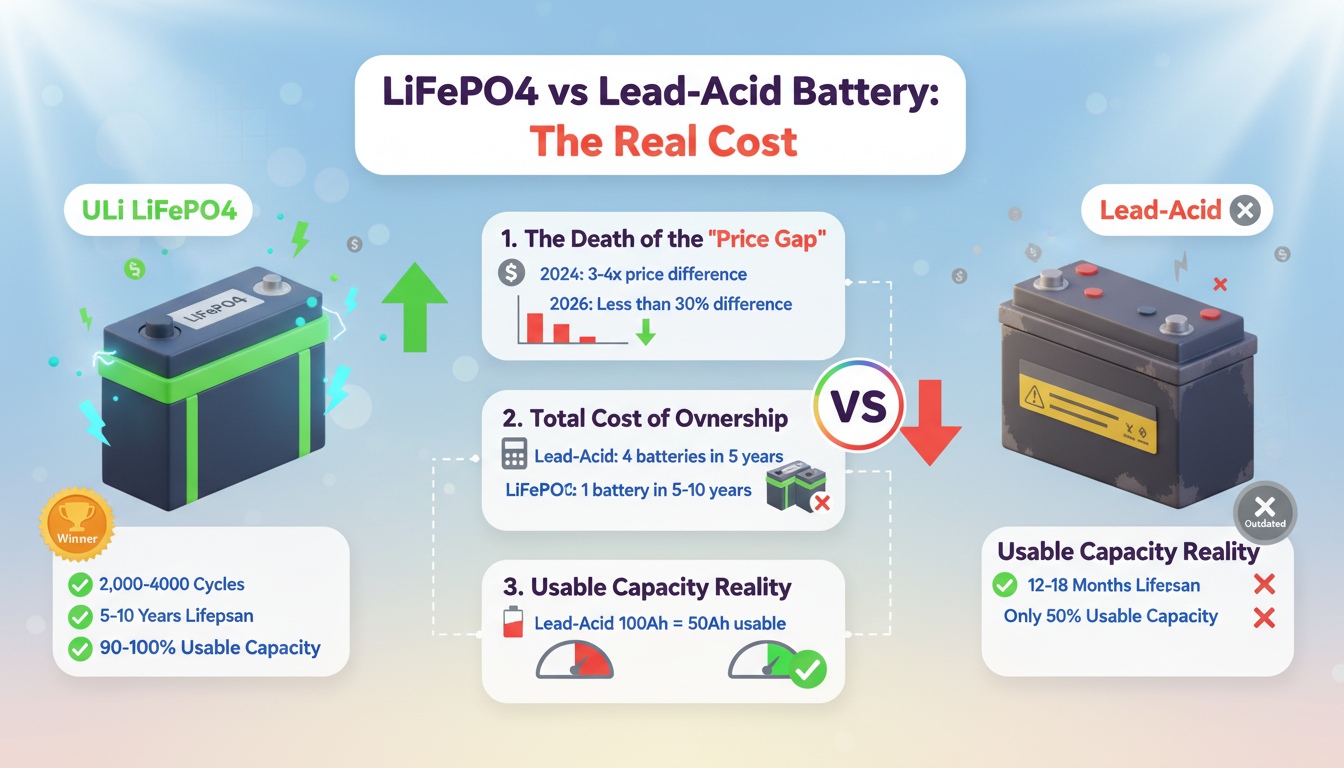
1. The Death of the “Price Gap”
In 2024, LiFePO4 was roughly 3-4x the price of lead-acid. Today, in 2026, that gap has narrowed significantly. When you factor in the usable energy per dollar, the difference in upfront investment is often less than 30%. For B2B wholesalers and high-performance e-motorcycle builders, this small delta is easily absorbed by the massive increase in value.
2. The TCO Math: Why Lead-Acid is Actually More Expensive
Total Cost of Ownership (TCO) is the only metric that matters. Let’s look at the numbers for a typical electric motorcycle application:
• Lead-Acid: Lasts ~300 cycles. In a high-usage environment, you’ll be replacing it every 12-18 months. By year 5, you’ve bought 4 batteries.
• ULi LiFePO4: Lasts 2,000 to 4,000 cycles. One battery easily lasts 5 to 10 years.
The Verdict: By the time you buy your second lead-acid replacement, you’ve already spent more than the cost of one high-quality ULi LiFePO4 pack.
3. Usable Capacity: Paying for What You Can Actually Use
Lead-acid batteries have a major flaw: Depth of Discharge (DoD). If you drain a lead-acid battery past 50%, its lifespan drops instantly.
• A 100Ah lead-acid battery only gives you 50Ah of safe, usable power.
• A ULi 100Ah LiFePO4 battery safely gives you 90-100Ah of power.
Essentially, you would need a lead-acid battery twice as big (and twice as heavy) to match the real-world range of one ULi LFP battery.
4. Performance Gains: Weight and Speed
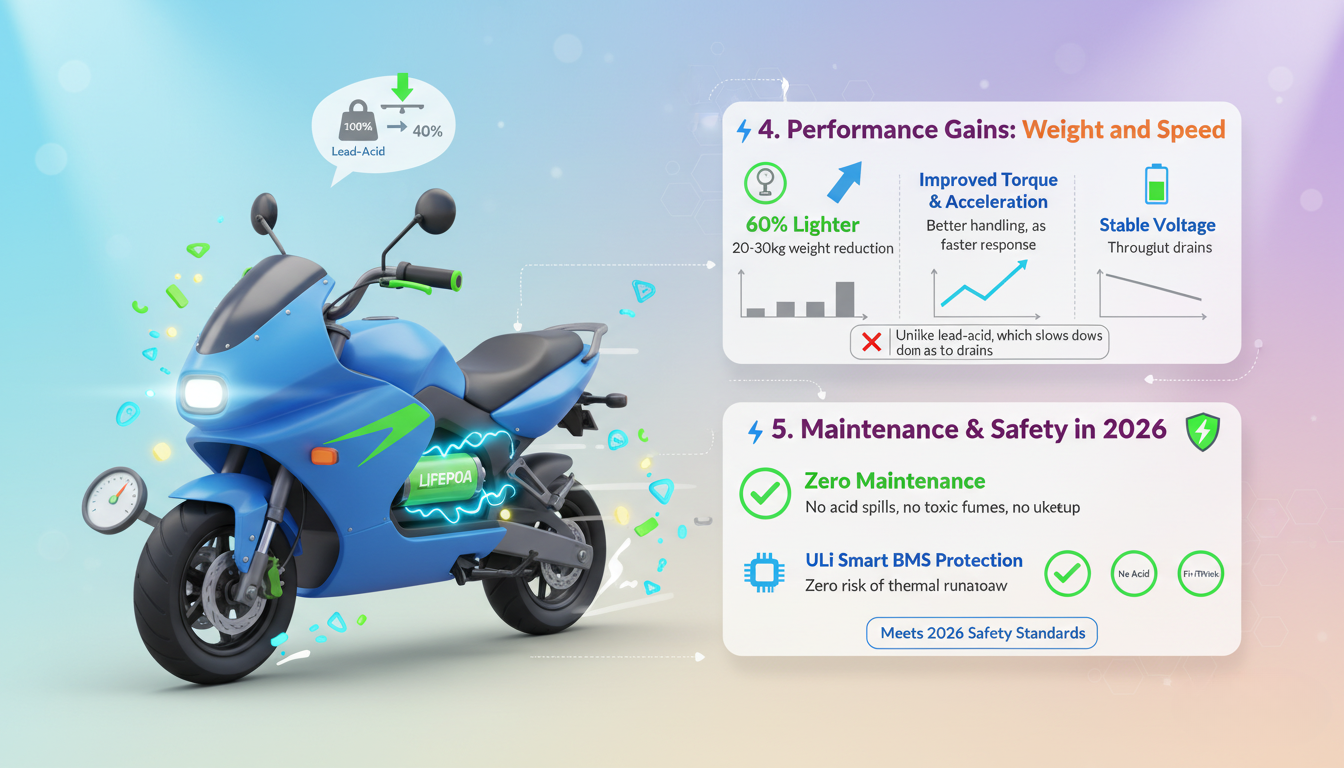
For electric motorcycle enthusiasts, weight is the enemy of speed. LiFePO4 is 60% lighter than lead-acid. Reducing 20-30kg from your bike improves torque, handling, and acceleration. ULi batteries maintain stable voltage throughout the entire discharge cycle, meaning your bike doesn’t lose “punch” as the battery gets low—unlike lead-acid, which slows down as it drains.
5. Maintenance & Safety in 2026
Modern LiFePO4 technology, paired with ULi’s Smart BMS, means zero maintenance. No acid spills, no toxic fumes, and zero risk of thermal runaway. In an era where safety standards are stricter than ever, LiFePO4 is the only responsible choice for high-power applications.
Conclusion: The Time to Switch is NOW
In 2026, sticking with lead-acid is no longer “saving money”—it’s a recurring tax on your wallet and your vehicle’s performance. Whether you are upgrading a single electric motorcycle or sourcing for an industrial project, ULi provides the Grade A cells and intelligent engineering to make your transition seamless and profitable.
Contact ULi for Professional Solutions:
Email: info@uli-power.com
Phone: +86 18565703627
Web: www.uli-power.com
Post time: May-13-2026