Pouch cells and 18650 cells are two mainstream lithium-ion battery formats, with core differences in structure, flexibility, performance, and application suitability. Below is a concise, optimized breakdown (streamlined for quick reading while retaining key insights):
1. Core Structure & Form Factor
Pouch Cell
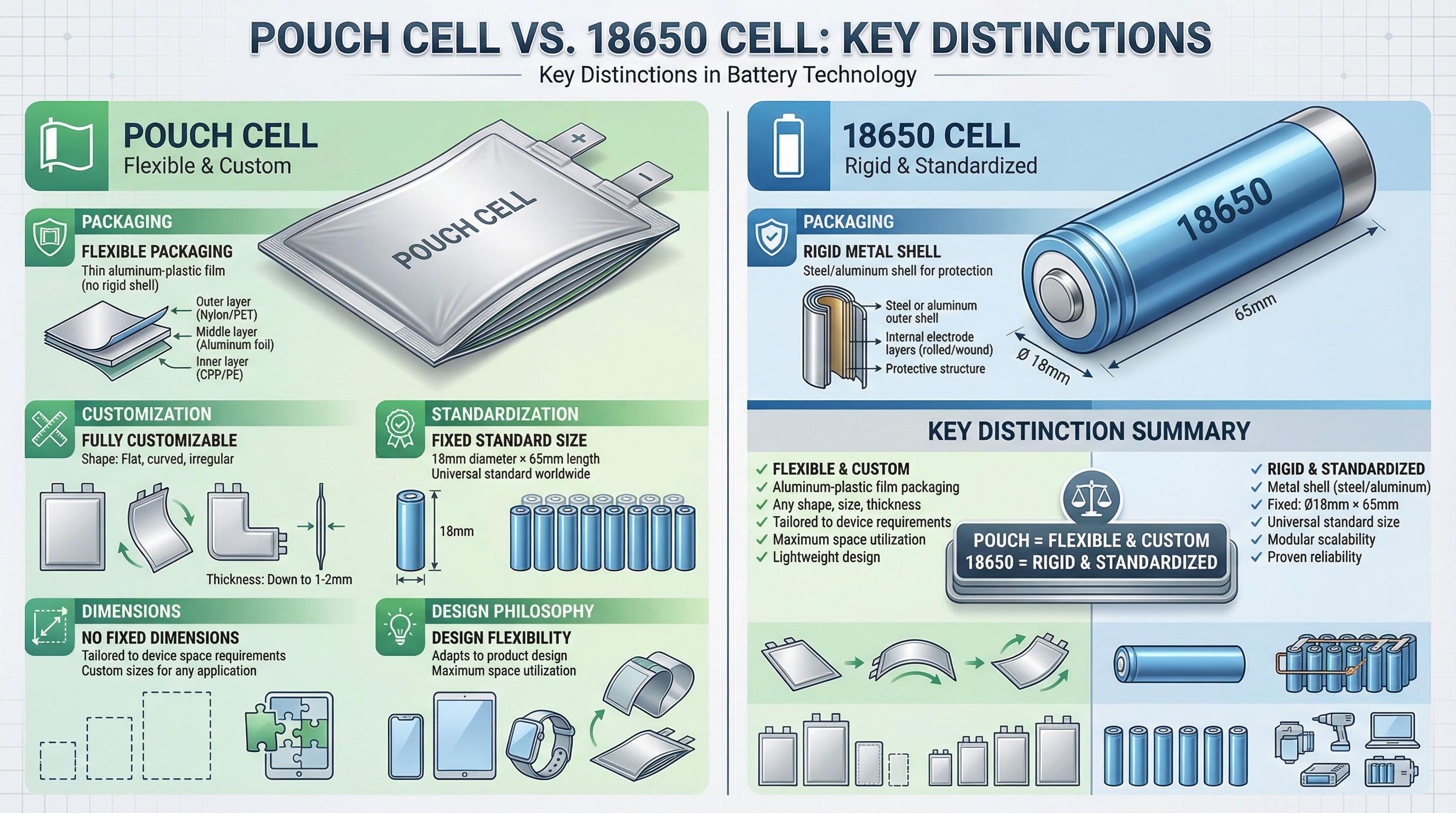
- Flexible packaging: Thin aluminum-plastic film (no rigid shell), fully customizable in shape (flat, curved, irregular) and thickness (down to 1–2mm).
- No fixed dimensions—tailored to device space requirements.
18650 Cell
- Standardized cylindrical design: 18mm (diameter) × 65mm (length), rigid metal shell (steel/aluminum) for protection.
- Fixed size—scalable only via series/parallel cell combinations.
Key Distinction: Pouch = flexible & custom; 18650 = rigid & standardized.
2. Key Performance Differences
Design Flexibility
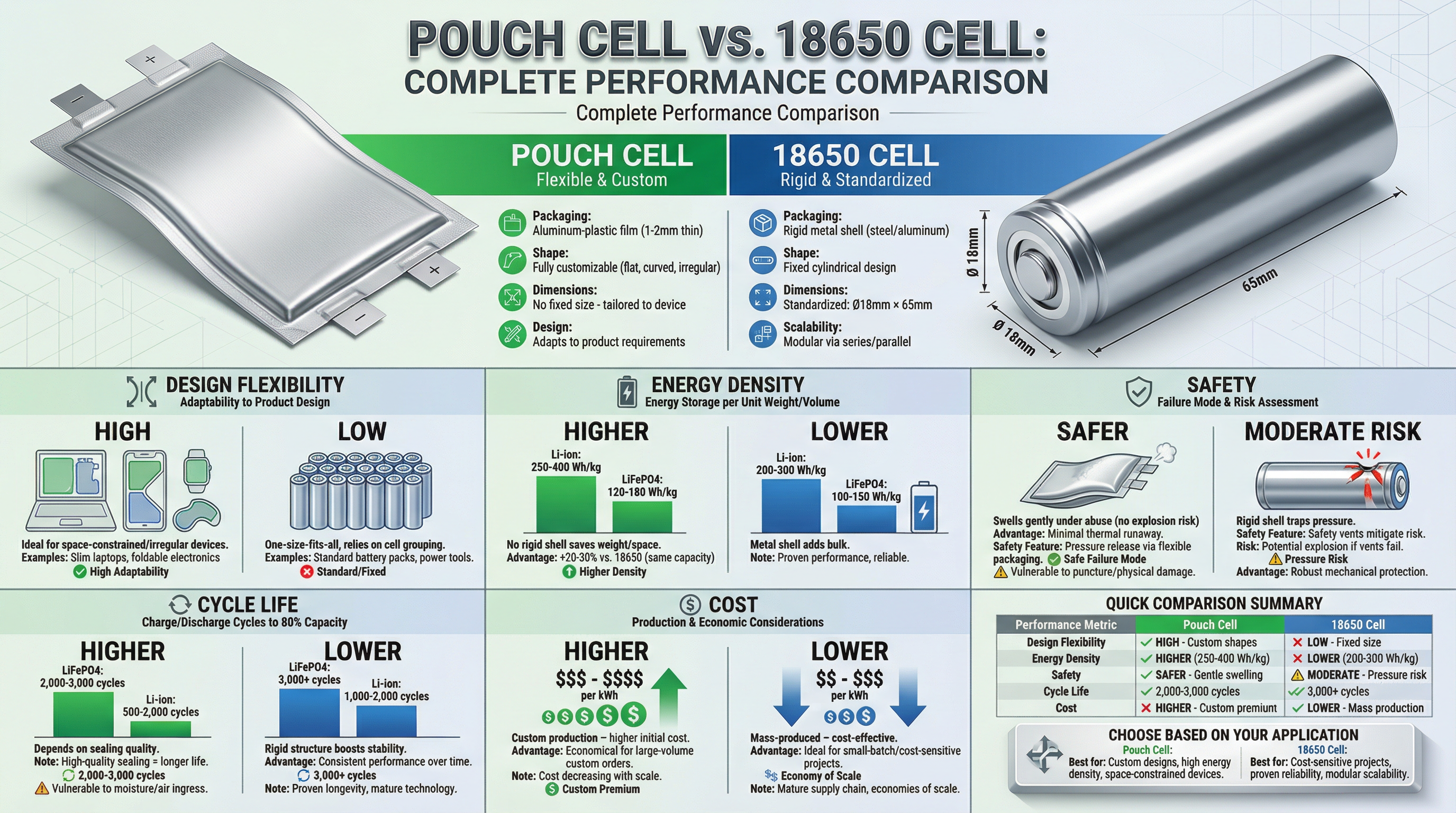
- Pouch Cell: High—ideal for space-constrained/irregular devices (e.g., slim laptops, foldable electronics).
- 18650 Cell: Low—one-size-fits-all, relies on cell grouping for scalability.
Energy Density
- Pouch Cell: Higher (250–400 Wh/kg for Li-ion; 120–180 Wh/kg for LiFePO4) – no rigid shell saves weight/space.
- 18650 Cell: Lower (200–300 Wh/kg for Li-ion; 100–150 Wh/kg for LiFePO4) – metal shell adds bulk.
Safety
- Pouch Cell: Safer—swells gently under abuse (no explosion risk), minimal thermal runaway.
- 18650 Cell: Moderate risk—rigid shell traps pressure (mitigated by safety vents but riskier than pouch).
Cycle Life
- Pouch Cell: 2,000–3,000 cycles (LiFePO4); 500–2,000 cycles (Li-ion) – depends on sealing quality.
- 18650 Cell: 3,000+ cycles (LiFePO4); 1,000–2,000 cycles (Li-ion) – rigid structure boosts stability.
Cost
- Pouch Cell: Higher (custom production) – economical only for large-volume custom orders.
- 18650 Cell: Lower (mass-produced) – cost-effective for small-batch/cost-sensitive projects.
3. Typical Applications
Pouch Cell
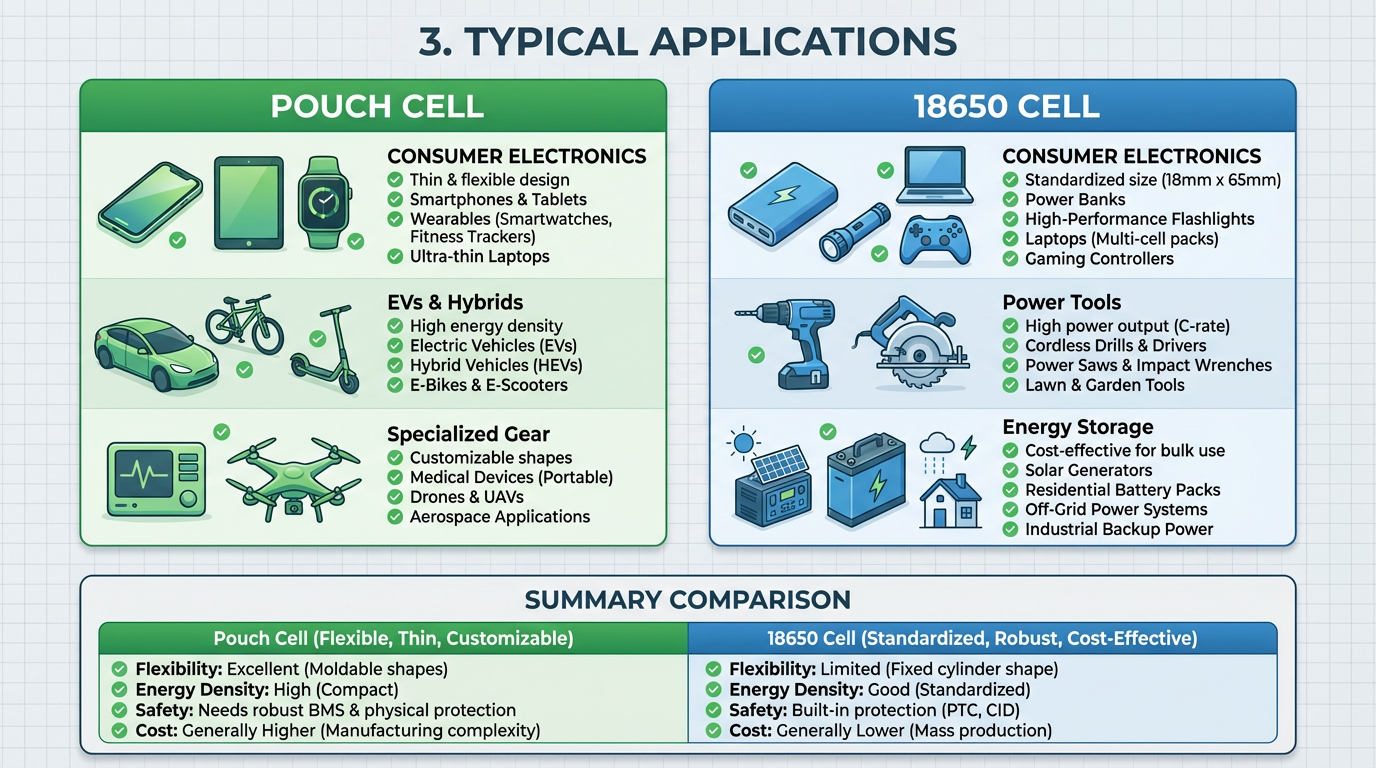
- Consumer electronics: Smartphones, tablets, foldable devices, wearables.
- EVs & hybrids: High-end models (custom shape fits chassis, higher energy density extends range), e-bike, e-motor, e-scooter etc.
- Specialized gear: Portable medical equipment, lightweight drones.
18650 Cell
- Consumer electronics: Power banks, flashlights, laptops, gaming controllers.
- Power tools: Cordless drills, saws (high-drain variants for sustained power).
- Energy storage: Portable solar generators, off-grid backup systems.
- Entry-level EVs/low-speed vehicles (cost-efficient cell grouping).
4. How to Choose?
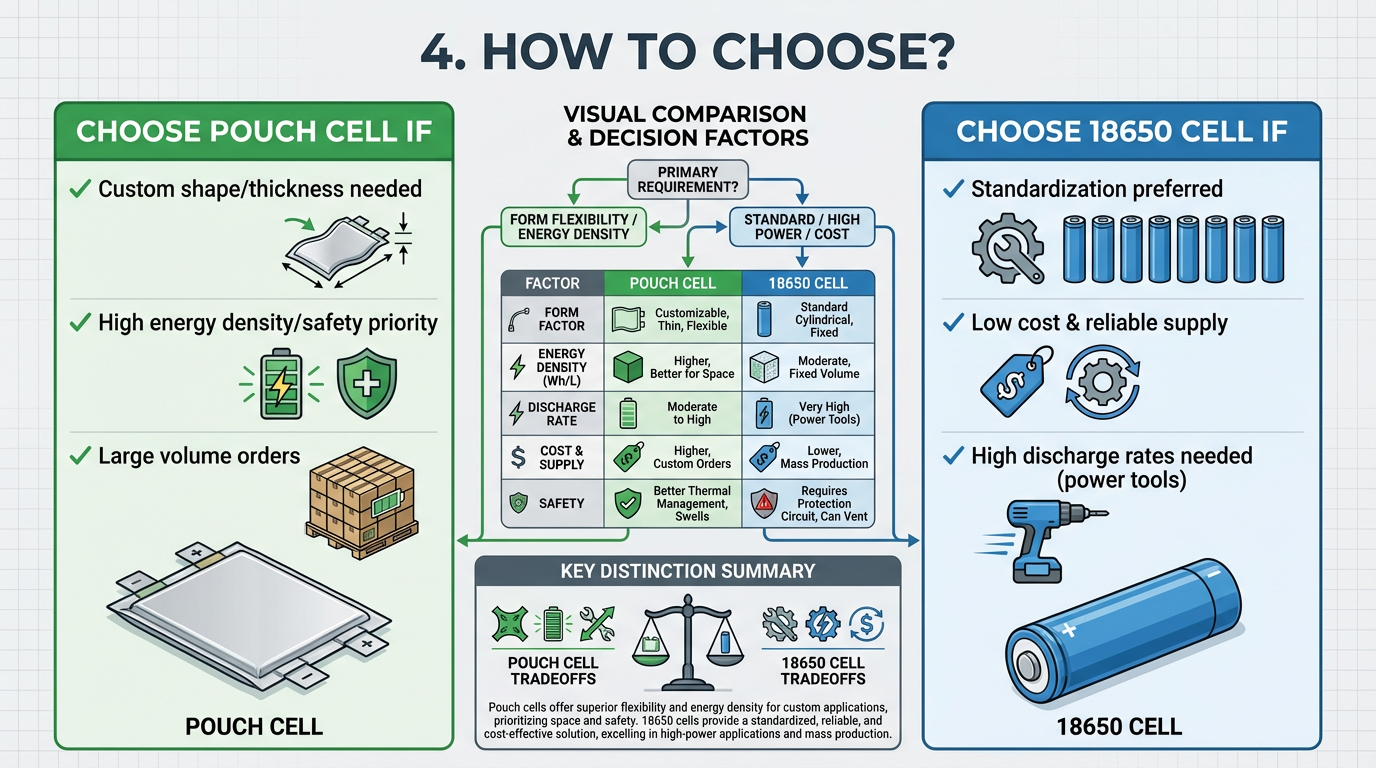
- Pick Pouch Cell if: You need custom shape/thickness, prioritize high energy density/safety, or order in large volumes.
- Pick 18650 Cell if: You want standardization, low cost, reliable supply, or high discharge rates (e.g., power tools).
Need Further Consultation?
For tailored advice on choosing the right battery format for your project, or to get a custom quote for Ulipower’s pouch cells (or 32140/18650 solutions), reach out to our team:
Email: info@uli-power.com
Visit our official website for more details – we’re here to support global clients with industry-leading battery solutions!
Ulipower – Delivering High-Performance Lithium Batteries for Global Industries.
Post time: Dec-05-2025