How to Properly Maintain Lithium Batteries: Extend Lifespan & Boost Performance
Lithium batteries (including LiFePO4, Li-ion, pouch cells, 18650s, etc.) power everything from smartphones to EVs and energy storage systems. With the right maintenance, you can maximize their cycle life, retain capacity, and avoid safety risks. Below are actionable tips for everyday use and long-term care:
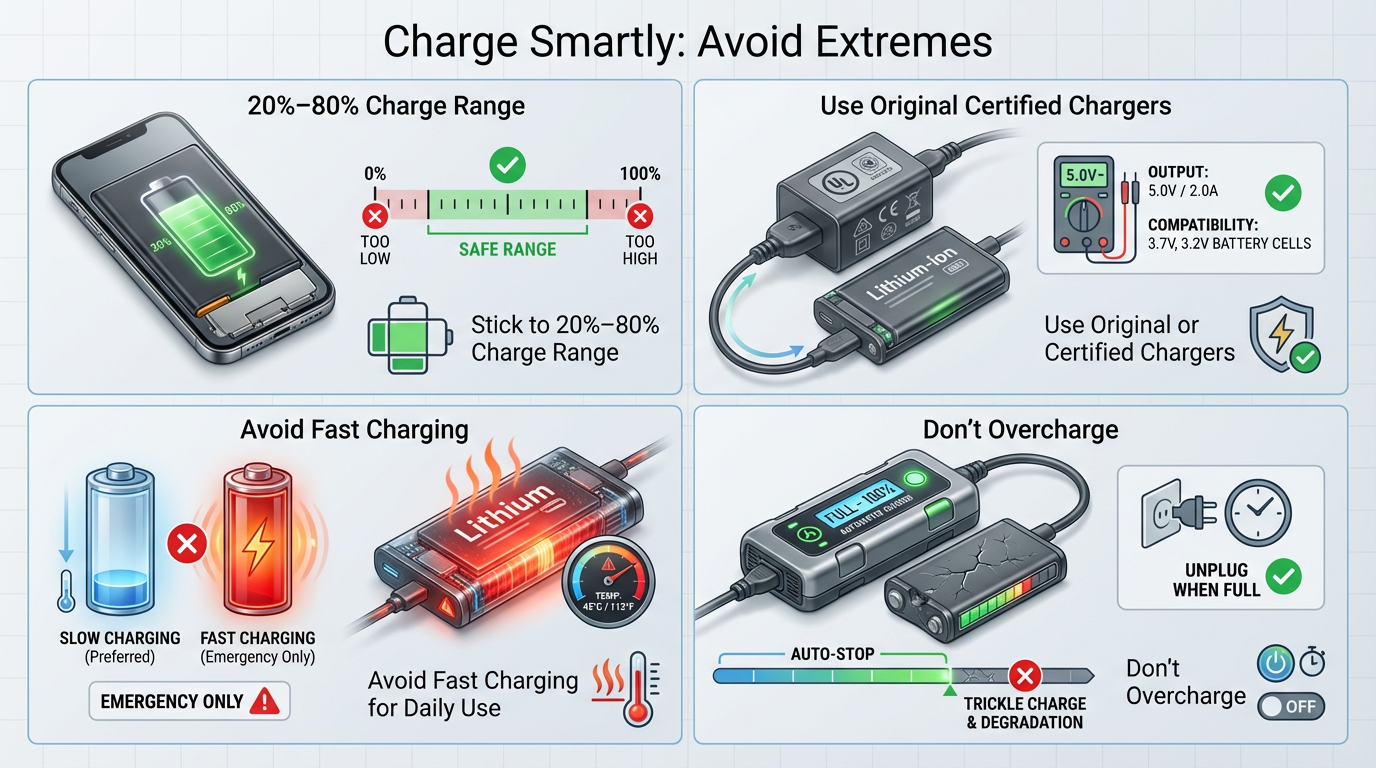
1. Charge Smartly: Avoid Extremes
- Stick to 20%–80% Charge Range (When Possible): Constantly charging to 100% or draining to 0% strains lithium batteries. For daily use (e.g., phones, laptops), keep the charge between 20% and 80%—this reduces stress on battery cells and preserves long-term capacity.
- Use Original or Certified Chargers: Cheap, uncertified chargers deliver unstable voltage, which damages cells and raises fire risks. Opt for chargers matching your battery’s voltage (e.g., 3.7V for 18650s, 3.2V for LiFePO4) and with safety certifications (UL, CE).
- Avoid Fast Charging for Daily Use: Fast charging generates more heat. Reserve it for emergencies—slow/standard charging is gentler and extends battery life.
- Don’t Overcharge: Unplug devices once fully charged (or use smart chargers that auto-stop). Leaving batteries on charge for days (e.g., unused laptops) causes “trickle charging,” which degrades cells over time.
2. Manage Temperature: Keep It Cool
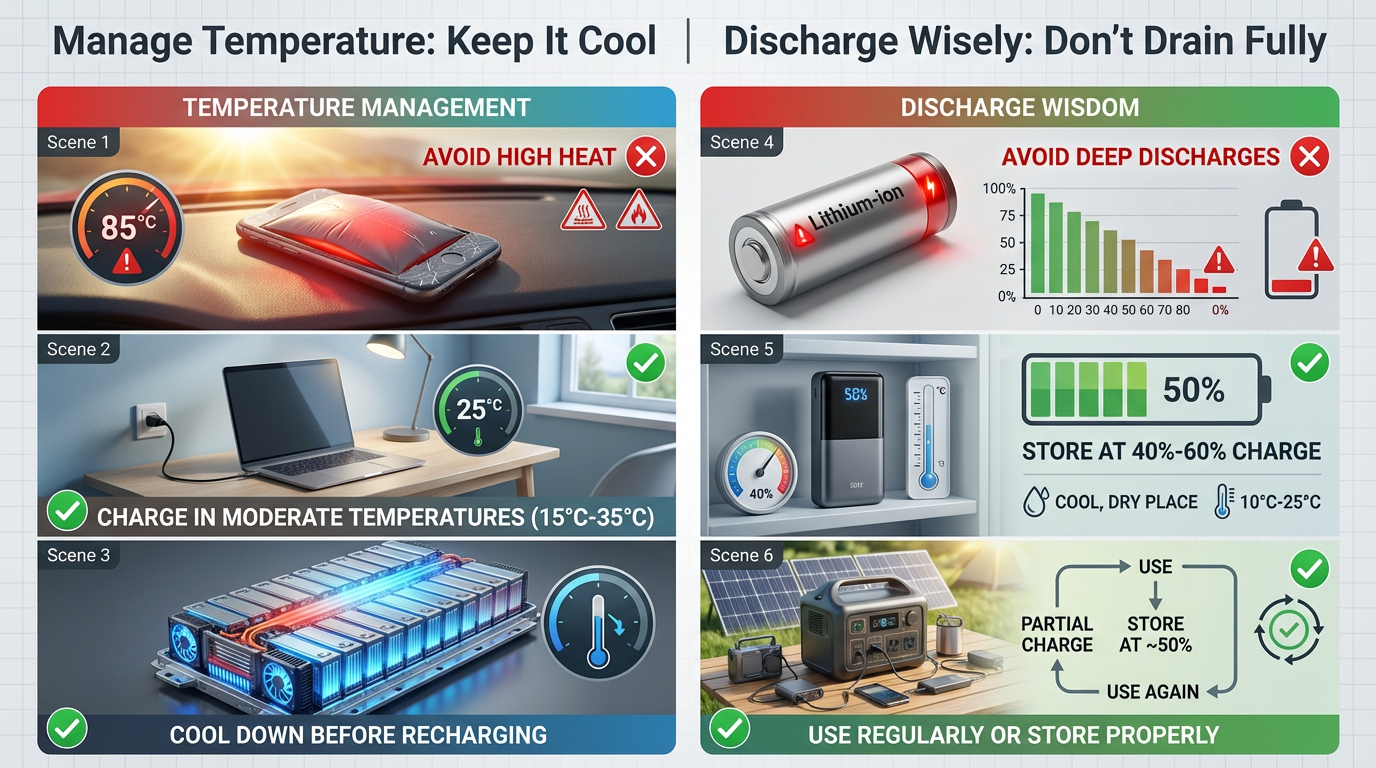
- Avoid High Heat: Lithium batteries hate extreme temperatures. Never leave them in direct sunlight (e.g., car dashboards, outdoor patios) or near heat sources (heaters, engines)—temperatures above 60°C can permanently damage capacity and trigger safety issues.
- Charge/Discharge in Moderate Temperatures: Opt for 15°C–35°C (59°F–95°F) for charging and use. Charging in freezing conditions (-10°C or below) can cause lithium plating, a irreversible issue that ruins battery performance.
- Cool Down Before Recharging: If your battery gets hot during use (e.g., after driving an EV or using power tools), let it cool to room temperature before plugging it in.
3. Discharge Wisely: Don’t Drain Fully
- Avoid Deep Discharges: Draining lithium batteries to 0% (especially repeatedly) damages the cell structure. For devices like power banks or energy storage systems, recharge once the charge drops to 10%–20%.
- Use Regularly (or Store Properly): Lithium batteries self-discharge slowly (2%–5% per month). If storing for more than 1 month:
- Charge to 40%–60% (the “safe storage level” for lithium cells).
- Store in a cool, dry place (10°C–25°C) away from moisture and metal objects.
- Recharge to 40%–60% every 3–6 months to prevent deep discharge.
- Don’t Leave Batteries Idle for Years: Unused batteries that fully discharge may become “dead” and unrechargeable—regular checks are key, keep 3-6 months with a charge and discharge cycle is necessary.
4. Physical Care: Protect the Battery
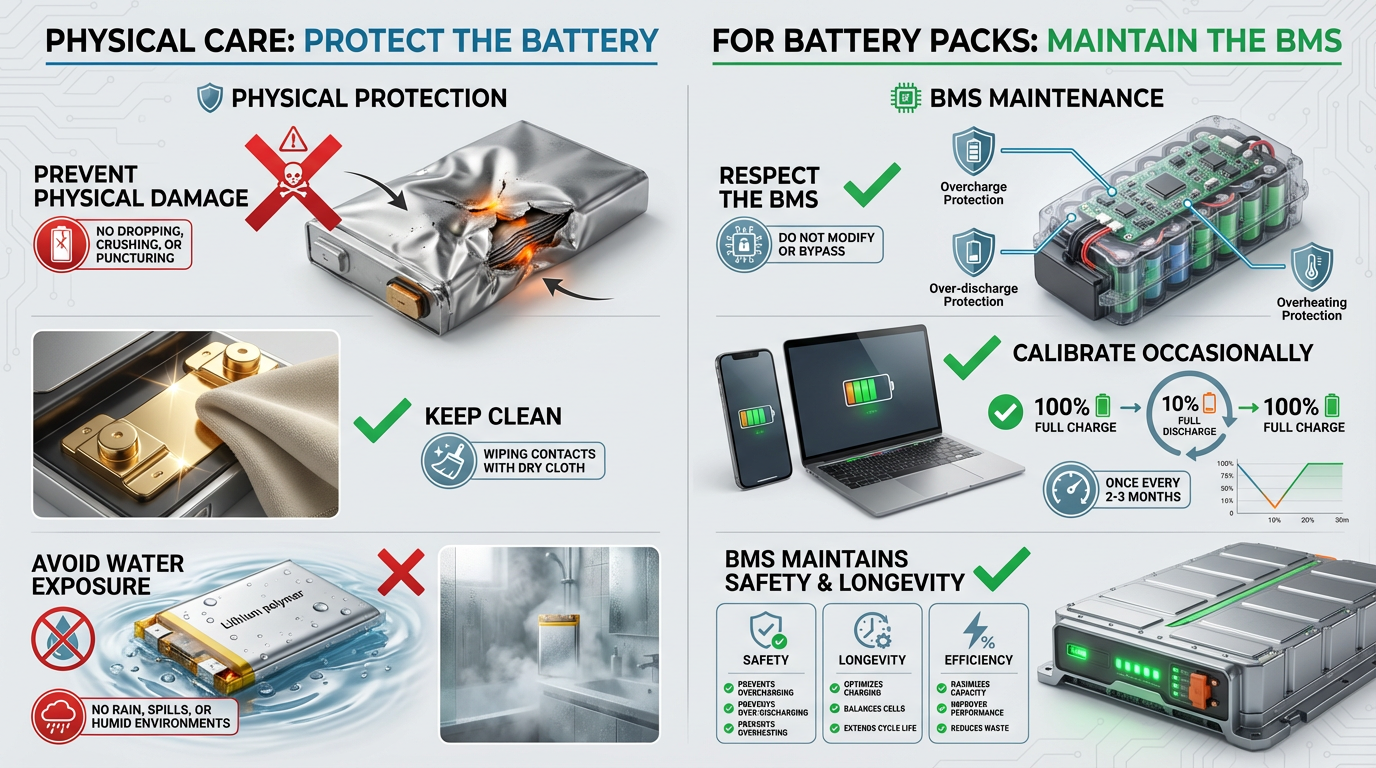
- Prevent Physical Damage: Avoid dropping, crushing, or puncturing batteries. For cylindrical cells (18650s) or pouch cells, a damaged shell/film can lead to electrolyte leakage, short circuits, or thermal runaway.
- Keep Clean: Wipe battery contacts (metal terminals) with a dry cloth occasionally to remove dust or corrosion—dirty contacts cause poor connectivity and inefficient charging.
- Avoid Water Exposure: Lithium batteries are not waterproof. Keep them away from rain, spills, or humid environments (e.g., bathrooms) to prevent short circuits.
5. For Battery Packs: Maintain the BMS
- Respect the BMS (Battery Management System): Most lithium battery packs (e.g., EV batteries, home storage systems) have a built-in BMS that prevents overcharging, over-discharging, and overheating. Never modify or bypass the BMS—this voids safety and shortens lifespan.
- Calibrate Occasionally: For devices with built-in batteries (e.g., phones, laptops), calibrate the battery once every 2–3 months: Charge to 100%, use until 10%, then fully recharge. This helps the device’s software accurately display the remaining charge.
Final Note: Know When to Replace
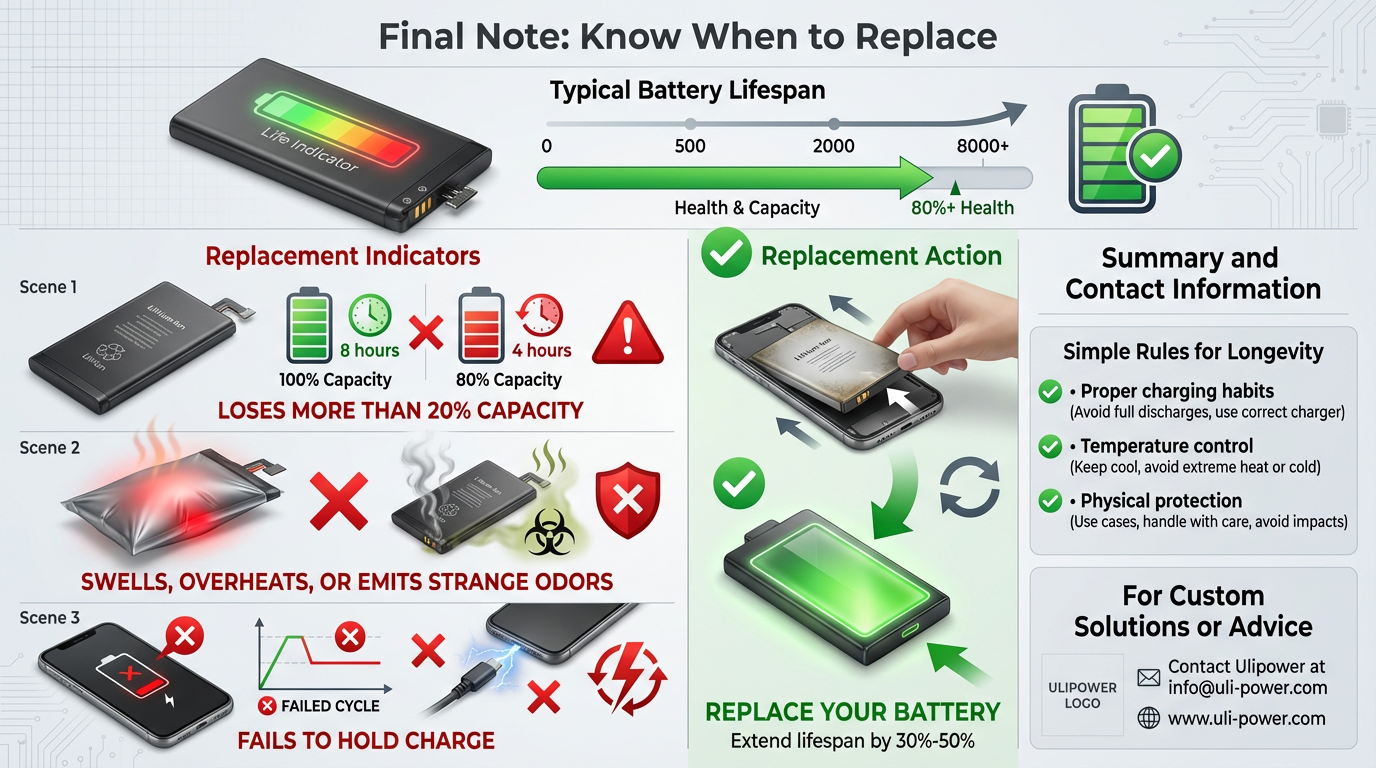
Even with perfect maintenance, lithium batteries have a limited lifespan (typically 500-8000+ cycles, depending on chemistry). Replace your battery if:
- It loses more than 20% of its original capacity (e.g., a phone that dies after 4 hours instead of 8).
- It swells, overheats quickly, or emits strange odors (safety hazard—stop using immediately!).
- It fails to hold a charge despite proper charging habits.
By following these simple rules, you can extend your lithium battery’s lifespan by 30%–50% and ensure safe, reliable performance for years. Whether it’s a small 18650 cell or a large home energy storage system, proper care equals better value!
For custom lithium battery solutions or more maintenance advice, contact Ulipower at info@uli-power.com — we’re here to support your power needs!
Post time: Dec-11-2025